‘AI will be key in improving productivity and profitability’
 Author: Jacco Strating
Technological developments are unfolding at a rapid pace, and the greenhouse horticulture sector is no exception. As technologies and growing techniques continue to evolve, growers are finding new ways to optimize production. We spoke with two growers from different parts of the world about the trends and developments they are observing.
At GreenTech, ‘PURE’ represents clarity and purpose in crop production. It’s about skilled professionals working with care and responsibility, applying well-considered methods within controlled environments that ensure consistency, transparency, and trust. We spotlight what truly drives innovation in horticulture. In the GreenTech monthly newsletter series, we’ll explore ‘PURE’ from multiple perspectives, bringing you fresh insights, trends, and technologies shaping the future of growing.
Art Farm grows bell peppers in South Korea. The company cultivates over 60 hectares of red, yellow and orange peppers. In the Gangjin region of Jeollanam-do, a key agricultural area in the southern part of South Korea, recent developments have focused on eco-friendly energy-based smart farming and AI-integrated advanced horticultural technologies, says Mr. Kim. He is a grower at Art Farm. “One notable development is the adoption of low-carbon smart greenhouse technologies that integrate renewable and alternative energy sources, such as geothermal energy, air-source heat pumps, and waste heat recovery, into greenhouse heating and cooling systems to reduce dependence on fossil fuels.”
Furthermore, smart farming technologies are evolving toward more advanced integrated control systems that combine AI with renewable energy sources, including agrivoltaics and energy storage systems (ESS). “The industry is moving beyond basic automation toward advanced horticultural greenhouses that aim for energy independence and carbon neutrality.”
Predict and control
At Art Farm, the main focus is AI-driven integrated climate control and energy optimization. Over the past three years, Art Farm has been receiving AI-based climate control services through Blue Radix. “For bell pepper cultivation, temperature, humidity, light levels, CO₂ concentration, and nutrient solution and drainage management must be carefully coordinated to achieve both high yields and consistent product quality that meets food safety and export standards”, says, Mr. Kim. “With extreme weather events becoming more frequent due to climate change and energy costs continuing to rise, AI technologies that predict and control the greenhouse microclimate based on data while optimizing heating and cooling energy consumption will be key to improving both productivity and profitability in smart farming.”
In addition, a demonstration project related to agrivoltaics is planned for 2027. Through this initiative, Art Farm aims to develop a commercially viable carbon-neutral greenhouse model by integrating on-site renewable energy generation, including solar power, with energy storage systems.
Art Farm also recently renovated its 1-hectare Venlo-type greenhouse into a four-season K-Semi-Closed Greenhouse, enabling year-round cultivation even during periods of high summer temperatures. This transformation has maintained consistent production of high-quality peppers throughout the year and strengthened its export competitiveness while supporting sustainable operations.
Intelligent robotics
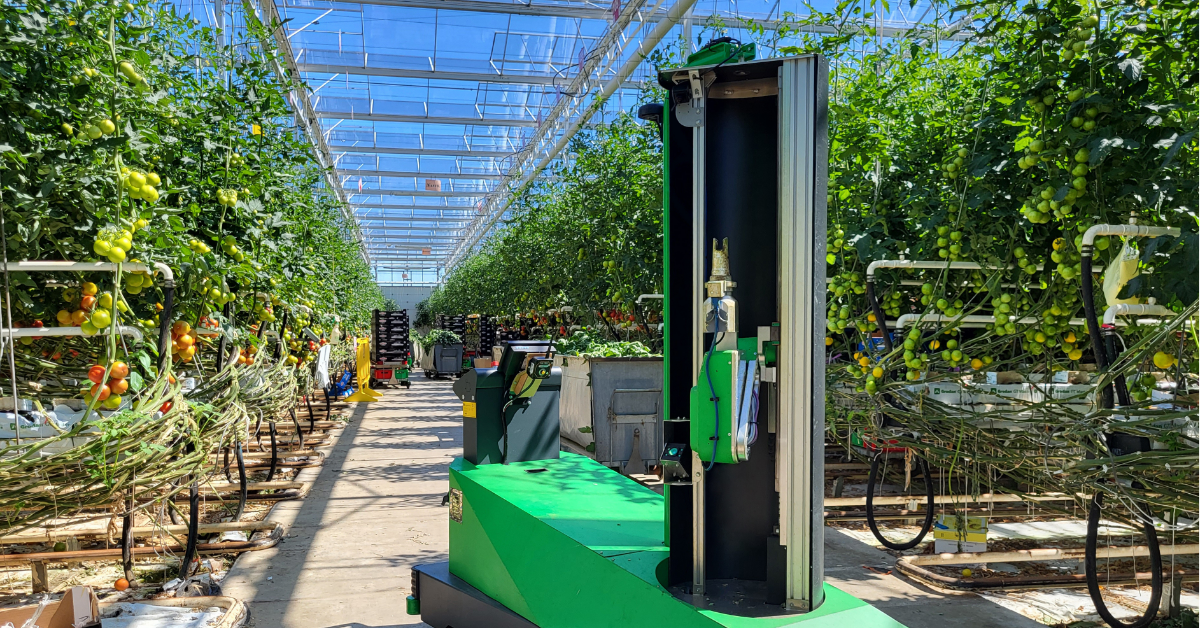
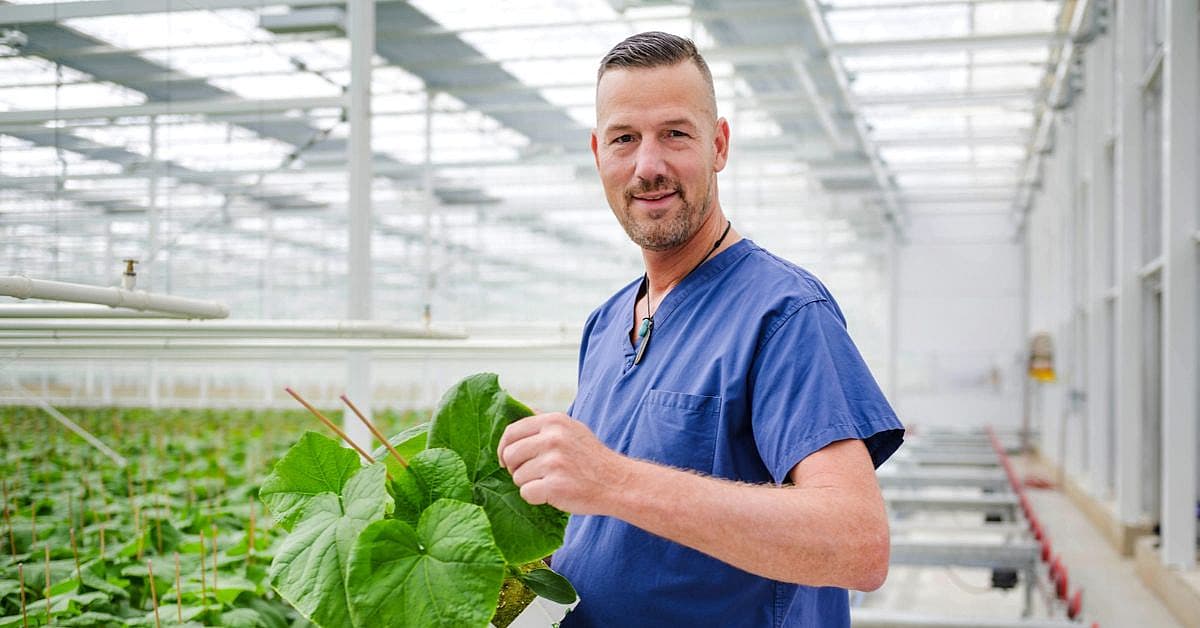
When looking at the future, Mr. Kim thinks one of the key innovations that will determine the long-term sustainability of the horticultural and smart farming industries is intelligent agricultural robotics. “Population decline, labor shortages, and rising labor costs are common challenges facing agriculture worldwide. The use of vision AI and precision-control robotics to automate labor-intensive tasks, such as harvesting and plant training, will become increasingly essential to maintaining productivity and operational efficiency.”
Ontario Plants in Canada is a leading North American horticulture company that specializes in growing and distributing high-quality young plants for organic and hydroponic greenhouse growers. The company propagates over 60 million young plants annually for the production of tomatoes, cucumbers, bell peppers and strawberries. As Manager Greenhouse Operations, Michel Hoogendoorn oversees the company’s 36-acre greenhouse facility in St. Thomas, Ontario, and works closely with the growing team. “Our team combines North American and European growing experience. Together we keep looking for ways to improve plant quality and consistency, while lowering production costs and using water and energy more efficiently.”
Two years ago, Ontario Plants also opened a 13-acre high-tech greenhouse facility in Glencoe, Ontario, built around biosecurity, quality assurance and sustainability. Speed doors help maintain an optimal growing environment, and the facility has certified cleaning stations, comprehensive pest management and continuous monitoring by in-house food safety specialists and entomologists. “Glencoe sets a high standard, and we apply what we learn there in St. Thomas as well.”
A whole-greenhouse approach
According to Hoogendoorn, good results come from a combination of factors. “You cannot look only at energy, or only at technology or labor. Everything in a greenhouse influences everything else, so you have to look at the big picture.” One approach gaining attention among Canadian growers is Plant Empowerment, a cultivation philosophy that focuses on the natural balance between energy, water and assimilates rather than on fixed growing recipes. “It helps growers make better decisions and build more resilient, sustainable growing systems,” says Hoogendoorn. “Applying it means looking differently at screening, air movement and light. Across the industry you see growers investing in better screens, roof coatings that let PAR light through while keeping heat out, and LED lighting with spectrum control.”
“Growing tables and insect netting are also becoming more common, both to deliver a better product and to support organic growing. There is a strong focus on plant resilience: the less chemical intervention needed, the better. Sustainability is a clear priority for growers and their customers here, and it keeps driving further innovation.”
Labor and automation
Labor is another important theme. Hoogendoorn expects that finding experienced people will become more challenging across the industry over time. “Experienced growers are valuable, so we invest in developing our own people and in tools that support them.” Developments in mechanization and robotization are therefore followed closely. “As labor costs rise, you look for ways to operate more efficiently. Mechanization will become very important in the coming years.” There is also growing interest in autonomous cultivation systems. “Operations are getting larger, while the number of experienced growers is not growing at the same pace. AI-driven systems can help bridge that gap, but human knowledge and experience remain essential for fine-tuning.”
Hoogendoorn sees strong interest in new developments among growers in the region. “Growers here are open and collaborative. They regularly get together to share knowledge, visit each other’s operations and attend trade shows such as GreenTech to see what is new.”


Have exclusive horticulture technology news delivered to your inbox
The GreenTech monthly newsletter brings you the latest exclusive horticulture technology news and updates about our global horticulture technology trade shows and events.
Join over 34,000 of your peers and receive:
☑ In-depth articles about greenhouse developments
☑ Exclusive commentary from industry leaders
☑ Knowledge session recordings and other event updates