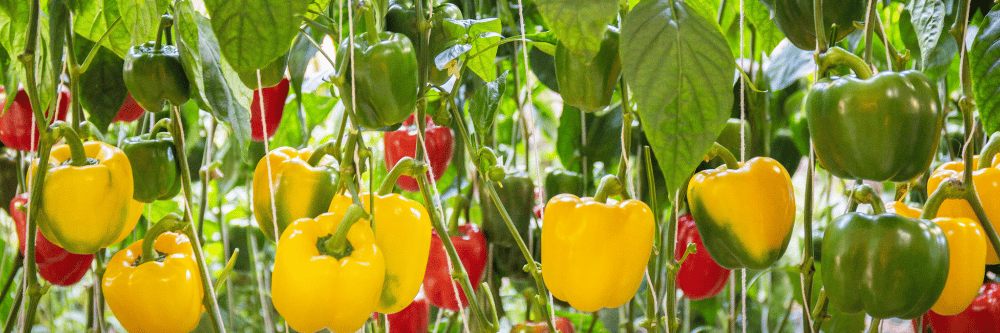
‘From food producer to health partner’
Natasja van der Lely is one of the 100 Dutch food changemakers included in this year’s Food100 list. It spotlights food professionals who are sticking their necks out for a better, healthier, and more sustainable world. Natasja made the list thanks to her commitment to the movement ‘New Lunch Culture’ (*Nieuwe Lunch Cultuur*). Who is she, what does this project entail, and how can greenhouse horticulture make a more targeted contribution to a healthy world?
At GreenTech, ‘PURE’ represents clarity and purpose in crop production. It’s about skilled professionals working with care and responsibility, applying well-considered methods within controlled environments that ensure consistency, transparency, and trust. We spotlight what truly drives innovation in horticulture. In the GreenTech monthly newsletter series, we’ll explore ‘PURE’ from multiple perspectives, bringing you fresh insights, trends, and technologies shaping the future of growing.
Natasja van der Lely is Health Programme Manager at Greenport West-Holland. This is a leading regional network and triple-helix organization in the Netherlands, where businesses, governments, and research/educational institutes collaborate to innovate and future-proof the sector.[MW2.1] As a program manager, she drives the health theme by connecting stakeholders and initiating projects. Natasja has been active in the greenhouse horticulture sector for nearly fourteen years. She spent a long time working at cress producer Koppert Cress as a strategic advisor a nd pioneer for Nutrition and Health. “That is where my enthusiasm for the impact of nutrition on health began. Health has become my compass, because the value of vegetables and fresh produce for prevention and public health is far from being fully realised. And that represents a huge opportunity for greenhouse horticulture!”
According to Natasja, the greenhouse horticulture sector should not focus solely on food production but also actively contribute to human health, new applications, and new markets. “I want to take this movement a step further: moving from great projects to a serious strategic pillar for the sector.” Natasja believes growers can cultivate crops with a much sharper focus on health—targeting nutritional value, specific compounds, and concrete health-related demands from the market or society. “Greenhouse horticulture has demonstrated its ability to tackle major challenges, ranging from energy and water to technology and crop protection. Health represents the next great opportunity. It allows the sector to evolve from a food producer into a health partner. Societal value and new revenue potential—what more could you ask for?”
A few more vegetables on the plate
During her time at Koppert Cress, she co-initiated the ‘New Lunch Culture’ movement, as she believes lunch is arguably the most underutilized part of the workday. “The Netherlands sees over 25 million lunch breaks a week, yet we barely eat vegetables, spend little time on it, and often eat alone or at our desks. New Lunch Culture is aimed at the Dutch workforce—some 10 million people. We want to make vegetable-rich, relaxed, and social lunches the new norm.” They are now collaborating with more than seventy partners and reaching over 100,000 employees. “That means millions of opportunities every week to make a real difference simply by having a few more vegetables on the plate. The greenhouse horticulture sector contributes not only products but also knowledge, networks, and innovation to this effort. And it’s about making a serious impact!”
A cost-benefit analysis shows that every euro invested in a healthy work lunch can generate between €2.40 and €3 in societal benefits. In total, this represents a potential value of €9 to €11.5 billion annually, driven by factors such as reduced absenteeism and disability, higher productivity, and improved quality of life. “A healthy lunch therefore yields not only health benefits but also economic value,” says Natasja. “We are working hard on further scaling up in 2027. We are establishing an independent foundation and developing the Lunch Impact Scan, which will allow employers to see exactly what a healthier lunch can deliver for their organization. At the same time, we aim to link employer demand much more intelligently with growers and the food supply chain.”
Horticulture, science, and daily life
New Lunch Culture is one of the initiatives Natasja is working on. But what connects everything she does? “The common thread is the societal value of greenhouse horticulture and health as an economic pillar. I find the connection between greenhouse horticulture, science, and daily life particularly interesting. I try to translate societal issues into concrete programs and breakthroughs. It’s not about producing another report that just gathers dust in a drawer; it’s about starting in practice, learning what works, and then scaling up.”
The fact that healthy nutrition is a key theme is evident from the existence of the Food100. This annual list spotlights one hundred people who are positively transforming the Dutch food supply chain. “It isn’t a ranking, but a network of doers, thinkers, and go-getters. And they are essential, because a food transition doesn’t happen on its own. Ultimately, it comes down to people who stick their necks out, simply get started on something, and bring others along with them. In 2026, I’ll be on that list alongside 99 others. Naturally, I’m incredibly proud of that.”
Natasja hopes that this recognition will lead people to view her work and projects in a new light. “I truly consider it an honor. For a long time, I have been working from within the greenhouse horticulture sector to highlight the significance and value of nutrition. Over the past few years, I’ve really stuck my neck out to advance the cause of health and the ‘New Lunch Culture.’ It’s fantastic to see that effort recognized. And I find it especially wonderful that an initiative originating in greenhouse horticulture is standing alongside so many other food changemakers. This recognition certainly doesn’t belong to me alone; it belongs to everyone who is building this movement together.”
Driving positive change
She is not the only food changemaker, either. “Certainly not. The Food100 is an initiative by AgriFood Capital, Food Hub, Food Inspiration, and the Slow Food Youth Network. Every year, they shine a spotlight on one hundred people who are driving positive change in the Dutch food supply chain. The tenth edition is set to take place in 2026. Above all, this demonstrates just how many people, across various sectors, are working hard to create a healthier, more sustainable, and fairer food system.”
According to Natasja, the greenhouse horticulture sector can contribute to her vision of a healthy Netherlands by using health as a guiding principle for how we produce, source, invest, and collaborate. “We have fantastic products and rank among the global leaders in knowledge and innovation. Imagine the potential if we harnessed that strength more deliberately to keep people healthy. This would pave the way for new products, supply chains, and markets. Moreover, if we make this health value demonstrable and economically visible, it creates opportunities to better reward growers for their contributions to people and society.”
Not a truly efficient food system
Nutrition and greenhouse horticulture are not the only remedy, but they are a crucial part of the solution. “Through nutrition and prevention, we can help tackle our biggest challenges: chronic diseases, health disparities, staff shortages, absenteeism, and rising healthcare costs. This is urgently needed. We have become exceptionally good at producing abundant, affordable food efficiently. However, we have focused too little on the actual contribution that food makes to human health. When the costs associated with ill health are ultimately borne by the healthcare system, employers, and society, it is hard to describe the food system as truly efficient.”
According to Natasja, it is all too easy to keep pointing the finger at the consumer when it comes to healthy eating. “Almost all the choices we make are unconscious. People make their choices within an environment that has largely been designed for them—think of the supermarket, but also the school canteen and the workplace cafeteria. If unhealthy options are cheaper, more convenient, and more visible all day long, you can’t simply tell people to make different choices. We need to ensure that healthy food is the natural choice, appealing, and—above all—delicious.”
Need the entire supply chain
We are well aware by now that nutrition is important for our health, Natasja concludes. “The question is how to organize this effectively. That requires the entire supply chain: from growers, producers, and caterers to employers, the healthcare sector, the government, and knowledge institutions. Healthy nutrition must become an integral part of policy, employment practices, healthcare, procurement, and innovation. Responsibility needs to shift from the individual alone to the surrounding environment and the system as a whole. Such a transformation won’t happen overnight, but the greenhouse horticulture sector can play a much more driving role in this process.”

Have exclusive horticulture technology news delivered to your inbox
The GreenTech monthly newsletter brings you the latest exclusive horticulture technology news and updates about our global horticulture technology trade shows and events.
Join over 34,000 of your peers and receive:
☑ In-depth articles about greenhouse developments
☑ Exclusive commentary from industry leaders
☑ Knowledge session recordings and other event updates