'Biobased underscores our relevance in society'
 Author: Jacco Strating
The horticulture sector is under international pressure due to strict environmental legislation, sustainability requirements, and public opinion. Biobased is a theme that can help the sector guarantee its future and cast horticulture in a more positive light, according to biobased specialist Willem Kemmers. Provided that companies join forces to get initiatives off the ground.
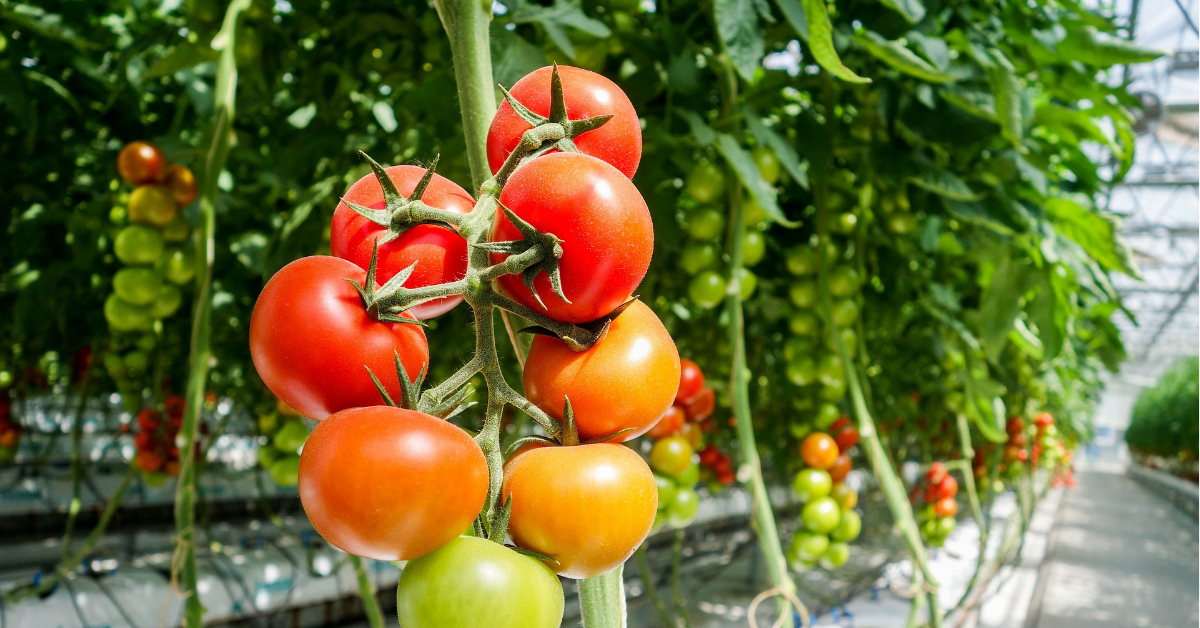
‘Biobased’ is a frequently heard word within greenhouse horticulture. But what exactly is the definition of this term? In essence, biobased means that materials and products are made from renewable, biological raw materials from nature, such as plants, trees, fibers, and residual waste from agriculture and horticulture. “In relation to horticulture, you can approach biobased from the input of a greenhouse, but also from the output,” says Willem Kemmers. He is Program Manager Biobased Circular at Greenport West-Holland, one of the world’s leading regions for greenhouse horticulture and fresh logistics. “From the input perspective, it involves replacing oil-based materials or materials derived from other raw materials with plant-based raw materials. Think, for example, of natural fiber twine instead of polypropylene twine to hold up tomatoes, peppers, and cucumbers. From the output perspective, you should think of the high-value use of, for example, stems and leaves for the fibers or sap. These residual streams are reused instead of being used for compost.”
Higher costs
Although the disposal and processing of residual streams are well organized in the Netherlands and other countries, a small amount of plastic always remains behind during compost production. “Due to stricter requirements, the demand for compost will therefore continue to decrease”, says Kemmers. “Green waste will then no longer be composted but incinerated, resulting in higher disposal costs for growers. That is why the development of biobased materials is so important, and why growers are increasingly looking for alternatives.”
But biobased solutions can also benefit growers. For instance, plant-based residual streams can be pressed, says Kemmers. He points out the Interreg ReJuice project, a Flanders-Netherlands initiative aimed at creating sustainable, high-value, and economically viable applications for the liquid fraction of green waste streams. “Press juice contains valuable substances, including nutrients. In a field test, press juice from chrysanthemum residual streams was processed to return to the greenhouse as base fertilization. This allows a grower to save on the purchase of fertilizers. As as result, specific products are already grown now only to collect those ingredients. They can be used by growers themselves or in other industries, thereby generating revenue.”
Bioboost Platform
In his role, Kemmers has been active for several years as an initiator of biobased projects, as a sharer of knowledge and inspiration, and as a connector of parties and ideas. Examples of projects include the production of textiles from tomato stems and the cultivation of Jack Beans for the benefit of kidney patients. The various initiatives are brought together and shared via the platform www.bioboost-platform.com. “A collection of over one hundred initiatives carried out in recent years can be found here.”
According to Kemmers, the enthusiasm to participate varies. “At one moment, entrepreneurs are more open to it than at other moments. But of course, there are also true innovators who have set themselves the goal of continuing to actively work on this. Whereas initiatives to add value to fibers received a lot of attention a few years ago, recently there has been more focus on initiatives surrounding pressed juice and active ingredients.”
Societal relevance
Kemmers sees an important role for biobased materials in the future of the horticulture sector as a whole. According to him, the sector needs to collaborate more and be more transparent to the outside world in order to maintain its viability. “The use of renewable raw materials and the valorization of residual streams are positive developments. Moreover, by focusing on the use of plant-based substances for applications in other sectors, such as for kidney patients, the versatility of the sector and its societal relevance are further underscored.”
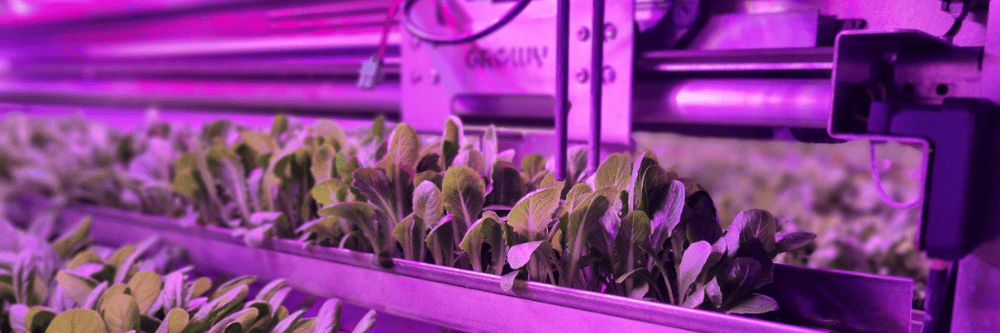
One company that explicitly wants to contribute to this societal relevance is the Amsterdam-based company Growy. Growy cultivates lettuce, herbs, and microgreens in fully controlled indoor farms. These products are grown in stacked layers in a closed system with LED lighting, climate control, and water reuse. This way, year-round local production with very consistent quality is possible, explains Laura van de Kreeke of Growy. “Our focus is on developing a scalable production system that allows us to grow fresh vegetables closer to the consumer. With this, we supply both supermarkets and the hospitality industry, with the aim of making local food production more reliable and sustainable.”
Sustainable production
At the farm in Amsterdam, automation, data analysis, and plant science are combined to make cultivation as efficient and predictable as possible. “We have to work with the space we have built, so we are constantly working on increasing yield and reducing input per square meter of cultivation. In addition, we collaborate with breeders to develop new varieties specifically suitable for indoor cultivation, for example with better taste, texture, or yield, and we experiment with new materials and cultivation recipes to continuously make our production even more sustainable. For example, in the area of substrate and raw materials.”
Biobased materials therefore play an important role at Growy. “In vertical farming, synthetic substrates or substrates that are not sustainably produced are often used. We research and develop alternatives based on biological raw materials. An example of this is our own substrate, GrowFoam, which is based on biobased materials and designed for circular use. The goal is to develop materials that function well in a high-tech cultivation system, but at the same time are less dependent on fossil raw materials.”
Better close cycles
In practice, this means that Growy continuously tests new materials and processes. All materials used in the farm are also critically examined, [JZ1.1]from systems to packaging. “The goal is to gradually implement more biobased and circular solutions, without compromising food safety or product quality,” says Van de Kreeke. “The horticulture sector faces the challenge of producing more sustainably while the demand for food continues to grow. Biobased materials can help reduce dependence on fossil fuels and better close (waste) cycles.”
For a sector heavily dependent on materials such as plastics, substrates, and energy, it is important to develop alternatives that are more sustainable in the long term, according to Van der Kreeke. “By experimenting with this in new cultivation systems such as vertical farming, we can contribute to innovation that can also be applied more broadly within the sector. I expect that in the coming years, there will be much more focus on circular materials in horticulture. Think of new bio-based substrates, more recyclable or compostable materials, and systems where raw materials are used much more efficiently and even reused. I also hope that more collaboration will emerge between different sectors—for example, between agriculture and horticulture, chemistry, technology, and materials development, to develop new solutions together. For companies like ours, the challenge lies primarily in combining these new materials with high-tech cultivation systems, so that sustainability and scalability go hand in hand.”

.png?h=628&iar=0&w=1200)
.png?h=628&iar=0&w=1200)